Four Selective Colleges Just Dropped Their Supplemental Essays. Only One Admitted Why: AI.
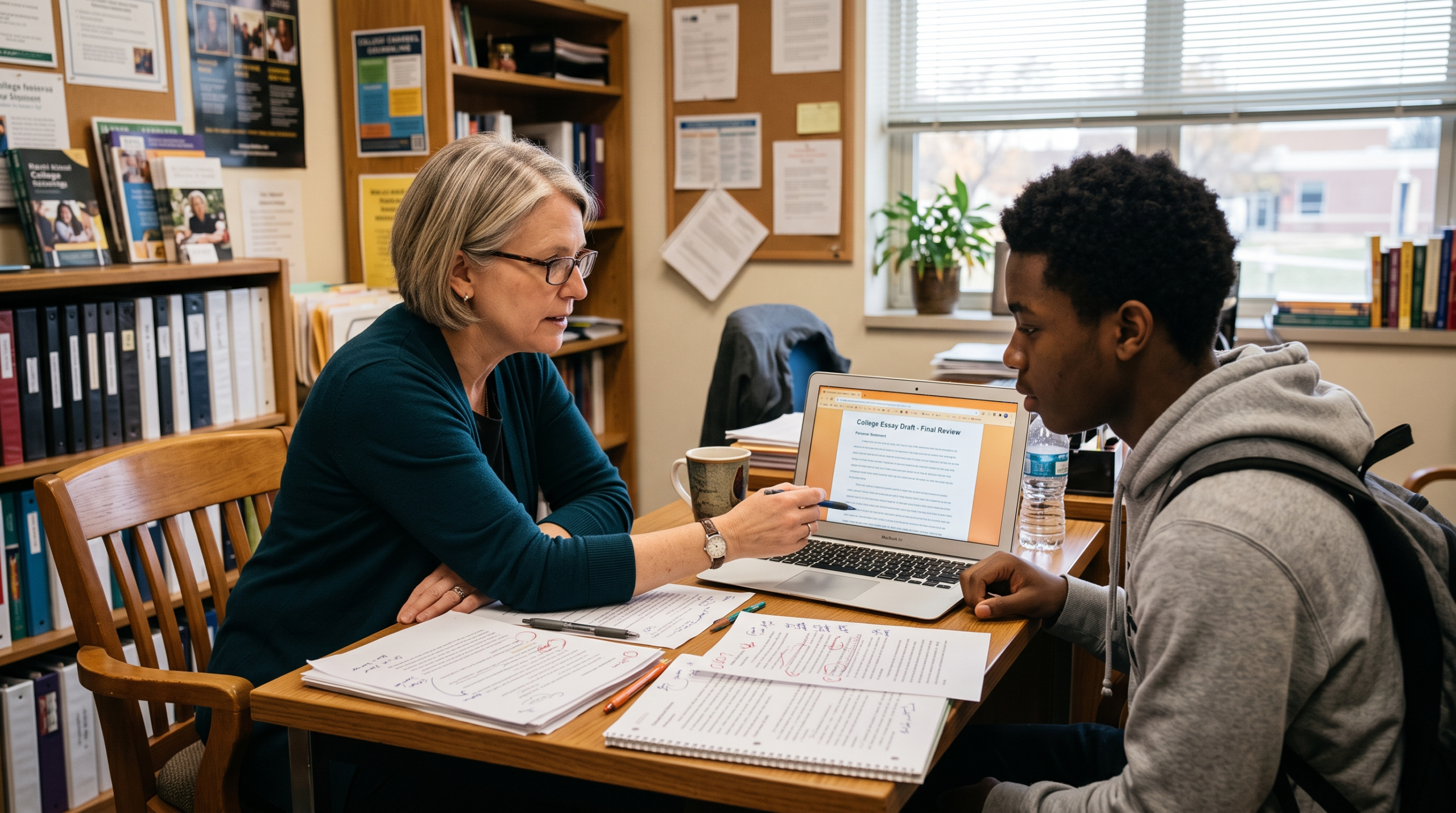
Four selective colleges just told applicants they no longer need to write a second essay. Only one told counselors the real reason.
Between May and July, Tulane, the University of Georgia, Washington University in St. Louis, and Cornell each announced they were dropping or scaling back their supplemental essay requirements for the 2026–27 admissions cycle. That follows the University of Virginia and TCU, which made the same move a year earlier. For the students you advise this fall, that means the 650-word Common App personal statement is no longer one piece of the application. At a growing list of selective schools, it is the only writing an admissions officer will read.
The Official Reasons Vary. The Unofficial Reason Does Not.
Ask five admissions deans why they cut an essay and you will get five answers. Ask what they are all quietly worried about and the list gets shorter.
Tulane was the one dean’s office willing to say it out loud. In an email to counselors announcing the end of the “Why Tulane?” essay, dean of admissions Shawn L. Abbott cited the rising use of generative AI in application essays as a factor in the decision. Washington University in St. Louis told a different story. Assistant vice provost for undergraduate admissions Grace James said the change came from listening to the people who write your job title.
“We found over time that the optional essay did not feel optional to students and often covered information shared in other parts of the application. We received feedback from school counselors that the optional essay was a source of stress and we wanted to decrease stress in the process as well.” Grace James, Washington University in St. Louis (2026)
Georgia said the math simply did not work. Director of undergraduate admissions David Graves wrote that after years of reading two essays per applicant, his team had determined the second one was not adding enough signal to justify the workload, adding plainly that his staff was “exhausted at the end of every read season.” Cornell’s Pamela Tan offered a version of the same conclusion for the universitywide essay her school cut, while keeping the school-specific supplement in place: it “wasn’t necessarily helping us to see a fuller picture of the student.”
Removing a Hurdle Also Removes a Filter
Every dean quoted above framed the change as a burden reduction. What none of them said directly is that fewer essays also means more applicants, and Virginia already ran the experiment. UVA dropped its supplemental essay for the 2025–26 cycle, and application volume climbed enough that the school admitted 10,287 students to the Class of 2030 amid what its own campus paper called an application surge.
The people whose job is to manage that surge for individual students are watching closely. In a recent survey by the Independent Educational Consultants Association, member consultants said they expect the essay removals to produce “inflating application volumes and admit-rate pressure,” according to IECA CEO Stephanie Simpson.
Not everyone sees a downside. Angel Pérez, CEO of the National Association for College Admission Counseling, said he was heartened by the trend. NACAC’s own ad hoc committee on student mental health during the transition to college has recommended that colleges simplify their admissions processes specifically to reduce application-season stress, and Pérez pointed to supplemental essays as a major contributor to that stress. Duke reached a similar conclusion earlier, when it removed essays from its quantitative scoring formula. Former dean of admissions Christoph Guttentag put it bluntly: the school was “no longer assuming that the essay is an accurate reflection of the student’s actual writing ability,” not after AI made a polished 250 words easy to produce and hard to verify.
What This Means for the Advice You Give This Fall
Your caseload does not need a lecture on AI detection. It needs a strategy for August.
Start by flagging which schools on each student’s list have actually dropped a requirement this cycle, not just which ones are rumored to be considering it. Tulane, UGA, WashU, and Cornell’s universitywide prompt are confirmed for 2026–27. That is a real shift in where a student’s limited essay-writing hours should go: less time drafting a “why us” answer that admissions offices are increasingly discounting anyway, more time revising the one personal statement that now has to do all the work.
Anita Doddi, a counselor with Collegewise, has been telling students exactly that. She said the “why us” prompt has become less useful as a filter because the answer is now easy to look up online, and she is steering students without a supplemental option toward an interview or video essay where a school offers one, since a single essay can feel like too much pressure for some applicants to carry alone.
Do not, however, tell students the essay itself is dying. Ethan Sawyer, founder of the College Essay Guy coaching firm, is skeptical that video will replace writing at scale, and he is right to be. “A piece of writing can convey certain qualities that, for many students, a video just can’t,” he said, and the admissions officers he talks to agree. The takeaway is not that essays no longer matter. It is that your students now have exactly one chance to get it right, at more schools than they had last year.
This week, pull your seniors’ college lists and mark which schools dropped an essay for this cycle. Then move their next working session from a supplemental draft to a full read-through of the personal statement, because for a growing number of the schools on that list, it is the only document anyone will read.
Sources
- Some Colleges Drop Supplemental Essays for 2026–27 — Inside Higher Ed, July 2026
- Fewer Essays, More Applications: The New Admissions Math — Applerouth, May 2026
- Fall 2027 Essay Questions — University of Georgia Office of Undergraduate Admissions, May 2026
- UVA Offers Admission to 10,287 Students for the Class of 2030 Amid Application Surge — The Cavalier Daily, March 2026
- Ad Hoc Committee on Mental Health and Equity in the Transition to Postsecondary Education — NACAC
Brent Florence
Licensed Counselor & Educational Consultant