Educators Expect Student Behavior to Get Worse This Year. Counselors Are Already Absorbing It.
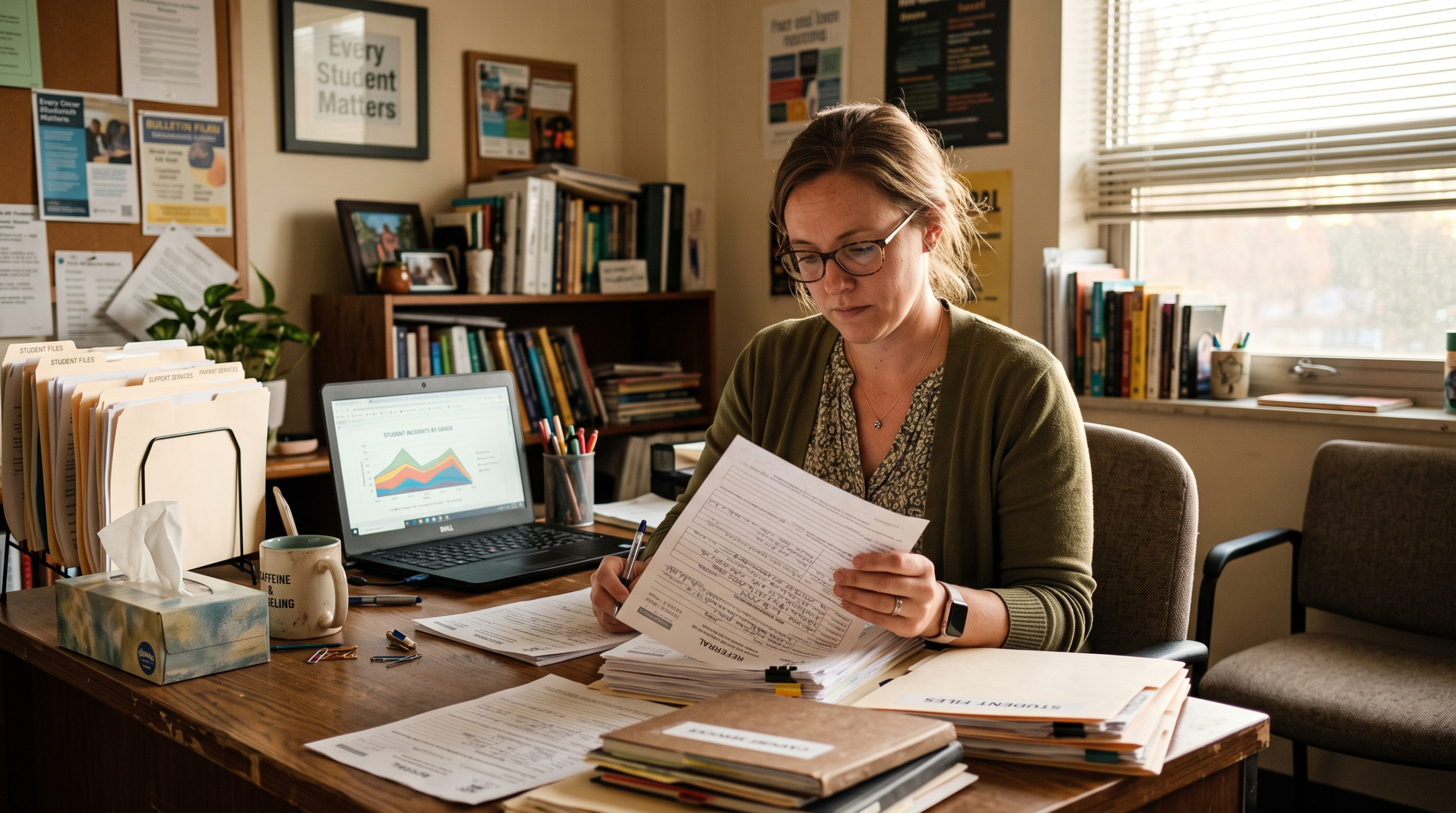
Ask a teacher what changed since spring and most will not need to think about it. Behavior. Always behavior. A new EdWeek Research Center survey of more than 1,000 teachers and school and district administrators just put a number on that instinct, and the number should land squarely on your desk, not just the classroom’s.
Given a list of 27 possible challenges for the 2026–27 school year, 75 percent of educators named student behavior as a major concern, the highest of any option. Student engagement followed at 70 percent. The top five answers all traced back to students themselves: behavior, engagement, well-being, mental health, and academic achievement. Budget uncertainty came in sixth, at 42 percent.
The Data Behind the Dread
The survey, administered from April 29 to June 22, 2026, is not measuring a hunch. Thirty-seven percent of respondents said their students’ behavior got “a lot worse” over the past school year, and another 34 percent said “a little worse.” That is seven in ten educators reporting decline, not stability. And they do not expect a turnaround: 22 percent said they expect behavior to get a lot worse this year, 28 percent a little worse.
“It’s no longer asking kids to work quietly or stop talking,” a high school math teacher in Texas told the survey. “It’s now dealing with kids who refuse to do work, who talk back, and who are acting out violently.”
You have heard some version of that sentence in a staff meeting already this fall. What the survey adds is scale: this is not one building having a rough year. It is a national pattern, and it is colliding with a second one.
Where the Positions Go When the Budget Tightens
Behavior support does not run on good intentions. It runs on staff, and staff is exactly what tight budgets cut first. At Stearne Elementary School in Philadelphia, principal Kenneth Orange spent weeks of early-morning meetings deciding how to absorb a district-wide budget reduction. The school will not fill an open seat on its climate-support team this year, the team that mediates student conflict and reinforces positive behavior. It will also lose one of two reading specialists.
“How do we now take those gains we made and sustain them with just one person?” Orange asked.
A high school principal in New York described the sharper version of the same trade-off: “We have eliminated an assistant principal position even though we have increased discipline referrals by 1,500 over the past two years.” Referrals up. Support down. That is not a paradox districts stumbled into. It is a budget decision, made in a room you were probably not in, that assumes counselors and case managers will quietly absorb what the eliminated position used to carry.
You already know how that math works in your building. The referrals do not go away when the position does. They land on whoever is left, which is usually you.
What Educators Say Would Actually Help
An earlier EdWeek Research Center survey of nearly 5,800 teachers, conducted between August and November 2025, asked what would improve student behavior and classroom management. Fifty-eight percent pointed to parents having clearer guidance on reinforcing behavior expectations at home. Fifty percent wanted tougher consequences for misbehavior. Forty-seven percent asked for more support from school leaders on discipline.
Notice what is missing from that list: more curriculum, more technology, more testing. Teachers are not asking for another initiative. They are asking for people, systems, and backup, which is the exact description of a functioning MTSS structure with a counselor at the center of it rather than at the edge, triaging crises that a fully staffed tier-two team would have caught in October.
“Student behaviors are constantly changing, and there is no training on how to deal with the extreme disruptions to learning,” an elementary school principal in Louisiana wrote in an open-ended survey response. Training is your lane. So is the tier-two intervention plan that keeps a disruption from becoming a suspension. Neither happens without staffing to run it.
The Job Gets Harder Before It Gets Easier
Sixty-four percent of educators surveyed believe their jobs will be a little or a lot more difficult this school year. Teachers were more likely than principals or district administrators to say a lot more difficult, which tells you where the daily weight actually sits. But the counselors and social workers absorbing referral spikes without replacement positions are carrying a version of that difficulty the survey did not isolate, because the survey was not built to ask counselors what changed for them specifically. It did not have to. The math is visible in every eliminated climate-team seat and every unfilled specialist line.
None of this is reassurance dressed up as bad news. It is a preview of the year, and previews are useful precisely because they arrive before the budget is finalized.
Start documenting now, while the data is fresh and the school year is young. Track referral volume against staffing levels in your building, the way the New York principal above clearly already has. Bring that number, not a general appeal, to the next budget conversation. Districts cut the positions they cannot see the cost of losing. Give them the cost, in writing, before the decision is made instead of after.
Sources
- 75% of Educators Expect Student Behavior to Be a Challenge This Year. What Else? — Education Week, August 2026
- Teachers Say Behavior Problems Aren’t Just About Students. It’s the Parents — Education Week, The State of Teaching 2026
- Philadelphia School Board Adopts Budget With 225 Million Dollars in Cuts — Chalkbeat, May 2026
- Why Superintendents’ Top Concerns Changed Fast in 2026 — Education Week, July 2026

Brent Florence
Licensed Counselor & Educational Consultant