College Counseling Centers Are at Capacity. The Numbers Make That Hard to Ignore.
College Counseling Centers Are at Capacity. The Numbers Make That Hard to Ignore.
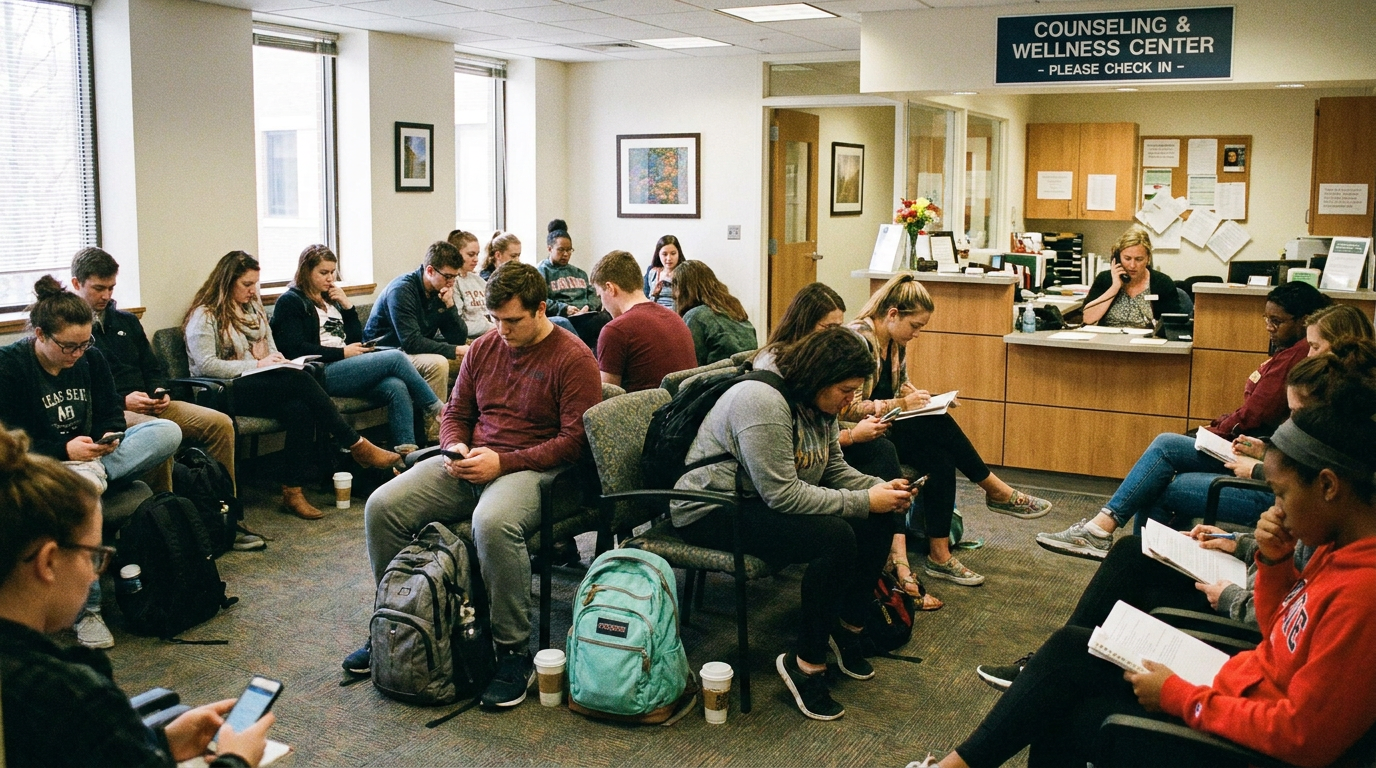
A May 2026 report from Inside Higher Ed documents what counselors working in college and university settings already know firsthand: demand is outpacing what campus mental health programs can deliver. Roughly 80% of college counseling center leaders report staff-to-student ratios of 1 to 500 or higher. Nearly half report ratios of 1 to 1,000 or worse. And 38% have lost staff to burnout in the past one to two years, while fewer than 1 in 4 have been able to reduce caseloads in response.
The Scope of the Problem
Utilization of college counseling centers has increased roughly 30% in recent years, and that trend has not plateaued. Wait times vary significantly by institution: about 40% of counseling center leaders say students typically wait fewer than three days for an appointment, while 33% report waits up to a week. A meaningful share of students wait one to two weeks or longer for an initial session.
The causes are layered. Student mental health need has increased, driven by anxiety, depression, loneliness, academic pressure, and the lasting effects of pandemic disruption during formative years. The staffing pipeline for campus counseling positions has not kept pace with demand. Burnout is pulling trained clinicians out of the field. And the increasing clinical complexity of presentations (more students arriving in genuine crisis, with histories of prior psychiatric treatment) demands more skill and more time per case than the current staffing ratios allow.
“Roughly 80% of campus counseling center leaders report staff-to-student ratios of 1 to 500 or higher, and nearly half report ratios of 1 to 1,000 or higher.” TimelyCare / Inside Higher Ed, 2026
What Clinicians and Administrators Can Do With This Information
For clinicians working in campus counseling centers: the system-level problem is not yours to solve alone, and trying to will accelerate burnout. What you can do is be rigorous about scope of practice, triage, and step-down care. Nearly 60% of institutions now partner with virtual mental health providers to extend access beyond what the counseling center can offer in-house. Knowing how to use those resources effectively, and how to connect students to them without it feeling like a rejection, is a core clinical skill right now.
For administrators and counseling center directors: the burnout numbers tell you something the budget spreadsheet does not. Centers losing 38% of staff in a one-to-two-year window are not experiencing normal attrition. They are signaling a structural breakdown. Caseload reduction, appropriate staffing ratios, and clear triage protocols are the infrastructure that keeps a center functional. Making that case to institutional leadership with this data behind you is not an ask; it is a necessity.
For K-12 counselors preparing students for college: student mental health services have become a legitimate factor in the college fit conversation. Asking where the CAPS office is, what average wait times look like, and whether the institution partners with virtual mental health providers is entirely reasonable. It helps students make better-informed decisions before they arrive on campus in crisis.
Sources
- Student Demand Outpaces Campus Counseling Availability — Inside Higher Ed, May 2026
- As Student Needs Rise, Campus Counseling Centers Confront Budget and Provider Shortages — TimelyCare, 2026
- How Wait Times Impact the Health and Well-Being of College Students — TimelyCare, 2026
- College Counseling Utilization Up 30%: Meet the Demand — FASPsych, 2026
- What’s Driving the Student Mental Health Crisis? — Inside Higher Ed, April 2026
- Colleges Struggling to Recruit Therapists for Students in Crisis — The 74, 2026
The Need Is Real. The Profession Has to Meet It With More Than Willpower.
Campus counseling is doing essential work under genuinely difficult conditions. The 2026 data does not change what counselors already experience every day. But it makes the case in numbers that administrators and policymakers find harder to dismiss. Know those numbers. Use them. The profession’s capacity to serve students well depends on it.

Brent Florence
Licensed Counselor & Educational Consultant