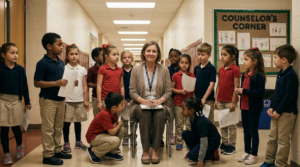
73% of School Counselors Say Mental Health Is Central to Their Job. Many Feel Underprepared for It.
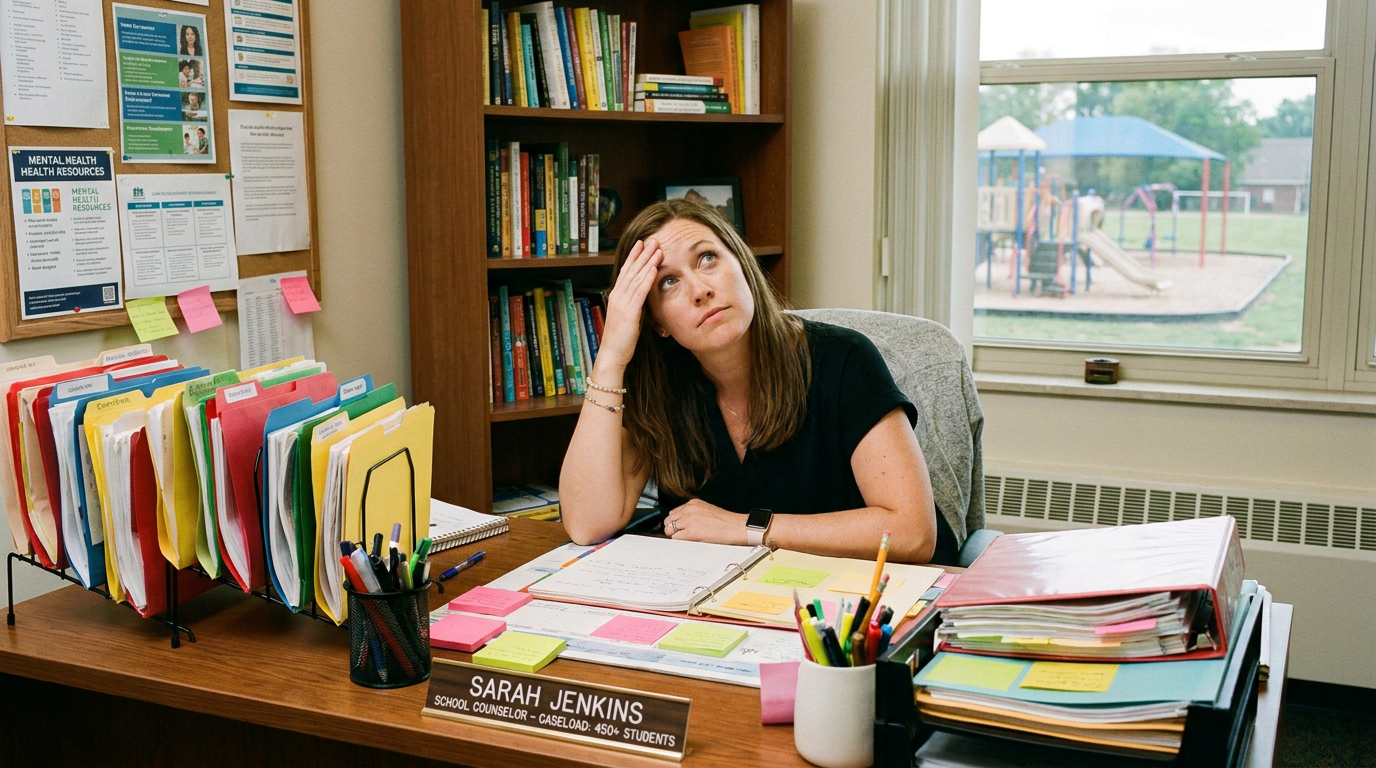
73% of School Counselors Say Mental Health Is Central to Their Job. Many Feel Underprepared for It.
Nearly three-quarters of school counselors report that mental health support is now a major part of their daily work. And a significant share of those same counselors say they feel underprepared to handle the growing complexity of what students are bringing into their offices. This is not a crisis of commitment. It is a crisis of preparation, caseload, and systemic support.
What the Data Shows
The YouScience 2025 School Counselor Report paints a consistent picture. Seventy-three percent of school counselors identify mental health support as a central part of their role. Over 56% manage caseloads of 300 to 400 students, well above the ASCA-recommended 250:1 ratio. And the nature of student mental health need has shifted in complexity: anxiety, depression, trauma, and social-emotional dysregulation now present in ways that require clinical sophistication, not just a listening ear and a referral list.
School counselors are not licensed clinical mental health counselors by training in most cases. The master’s programs that prepare school counselors are designed to produce school-based practitioners. Yet the expectations placed on those practitioners, particularly since the pandemic accelerated student mental health need, have moved steadily into clinical territory. The gap between what the training covers and what the job now demands is real and growing.
“73% of counselors share that mental health support is a major part of their job, but feel underprepared to handle the growing complexity of student mental health needs.” YouScience School Counselor Report, 2025
What Schools and Counselors Can Do About It
The solution is not for school counselors to become clinical therapists on top of everything else they do. The solution is better structural support: co-location of licensed clinical staff in schools, clear role differentiation between school counselors and mental health clinicians, and professional development that is specific to the presentations school counselors are actually encountering: trauma, crisis, anxiety, and grief. Not generic wellness programming.
For individual practitioners: be clear about what you are equipped to handle and what requires a clinical referral. Building a robust, current referral network of community mental health providers is a core competency right now, not a nice-to-have. If your district’s professional development budget allows, targeted training in trauma-informed practice, crisis response, and solution-focused brief counseling will serve you across nearly every case you see.
For district and building administrators: expecting a school counselor with a 400-student caseload to also serve as the school’s primary mental health provider is not sustainable and not appropriate. Role clarity protects both counselors and students. This work matters. The people doing it deserve the infrastructure to do it well.
Sources
- The State of School Counseling in America — YouScience, 2025
- Over Half of Public Schools Report Staffing and Funding Limit Their Efforts to Provide Mental Health Services — Institute of Education Sciences, 2026
- Growing Challenges for School Counselors Impact Student Outcomes — eSchool News, 2025
- American School Counselor Association (ASCA) — National Standards and Role Statement
- Student Mental Health Statistics 2026: Current Rates, Risks, and Trends — AmeriCorps Montgomery, 2026
You Are Carrying More Than the Job Was Written For. And That Is Worth Naming.
School counselors in 2026 are being asked to hold more than the role was originally designed for. Feeling underprepared for that is not a personal failure. It reflects a system that expanded expectations without expanding support. The answer is advocacy for the right structure, not pushing individual counselors harder. Know the difference, and fight for the former.

Brent Florence
Licensed Counselor & Educational Consultant